The Savior's Suffering
The Week That Changed Everything:
The Great Depression began not with a single catastrophe, but with the slow erosion of collective emotions reaching a tipping point. When fear gripped investors in October 1929, panic selling triggered a cascade that brought banks to their knees. Twenty-five percent of American banks failed within the coming months. Today, we have safeguards—market freezes, cooling-off periods—because history taught us that big emotions and group think often lead to disaster.
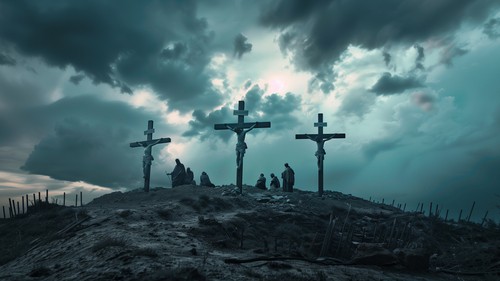
This same pattern of emotional frenzy played out during the most significant week in human history: Passion Week, the days leading to Jesus's crucifixion. It started with jubilant crowds shouting praises and ended with crowds demanding death. Between these emotional extremes lies a story that had been written centuries before it unfolded.
A King on a Donkey
Five hundred years before Jesus entered Jerusalem, the prophet Zechariah penned words that would echo through generations: "Rejoice greatly, O daughter of Zion. Shout aloud, O daughter of Jerusalem. Behold, your king is coming to you, righteous and having salvation is he, humble and mounted on a donkey, on a colt, the foal of a donkey."
This prophecy emerged during a pivotal moment in Israel's history. The Jewish people had returned from seventy years of Babylonian captivity, just as Jeremiah had predicted. They rebuilt the temple under Zerubbabel and reconstructed Jerusalem's walls under Nehemiah. Yet something was missing. When Solomon's temple was completed, God's presence had descended in miraculous clouds. But when Zerubbabel finished his temple, nothing happened. The people waited. And waited.
For five centuries, they wondered when God would send the promised Messiah to fill the temple again.
The prophecy itself was peculiar. A king arriving humbly? On a donkey instead of a war horse? This wasn't the conquering hero Israel expected. When your team is down in the championship, you don't want a gentle comeback—you want domination. Yet God promised something different: not revenge, but salvation. Not warfare, but peace.
The Moment Arrives
When Jesus finally rode into Jerusalem on what we now call Palm Sunday, the crowds recognized what was happening. They had been waiting since Zechariah's prophecy was written. They spread their cloaks on the road, cut branches from fields, and shouted "Hosanna!"—which means "save (us) now."
The implication was unmistakable. This was the Savior. This was the fulfillment of ancient promises.
The religious leaders knew it too. They demanded Jesus rebuke His disciples for the spectacle. His response was unapologetically awesome: "I tell you, if these were silent, the very stones would cry out." This moment was predestined. Nothing could stop the will of God from unfolding.
Blood on the Doorposts
To understand what happened next, we must travel back even further—to Egypt, around 1500 BC. God's people were enslaved, and Moses stood before Pharaoh demanding their release. Plague after plague struck Egypt, but Pharaoh's heart remained hard.
The final plague would be the most terrible: the death of every firstborn son. But God provided a way of escape for His people. He instructed each household to take a lamb without blemish, kill it, and spread its blood on their doorposts and lintels. When the angel of death passed through Egypt that night, every home marked with blood would be passed over.
God gave specific instructions for that meal: eat with your belt fastened, sandals on your feet, staff in hand. Eat in haste. Why? Because freedom was coming. Be ready to move when God sets you free.
Life must be taken for life to be given. This is a truth we've become disconnected from in our modern world of grocery stores and pre-packaged meat. But in an agrarian society, everyone understood: your life gets to continue because life has been taken from elsewhere, whether from plant or beast.
The New Passover
Fast forward fifteen hundred years to Thursday night of Passion Week. Jesus and his disciples gathered for the Passover meal in an upper room. They had likely gone through all the traditional Jewish customs—the bitter herbs, the unleavened bread, the retelling of the Exodus story.
Then Jesus did something revolutionary. He held up bread and wine and said: "This is my body... this is my blood of the covenant, which is poured out for many for the forgiveness of sins."
A new Passover. A new covenant. Everything the prophets had spoken about was unfolding before their eyes. The old Passover was merely a foreshadow of this superior reality. Just as lamb's blood once protected God's people from death, now the blood of the perfect Lamb would offer something far greater: forgiveness of sins and a new kingdom.
Thirty Pieces of Silver
Even the betrayal was prophesied. Psalm 41 spoke of a close friend who ate bread with the Messiah lifting his heel against him. Zechariah 11 got even more specific: thirty pieces of silver would be the price, and that blood money would be thrown to the potter.
When Judas betrayed Jesus for exactly thirty pieces of silver, the religious leaders were literally fulfilling prophecy while fighting against it. After Jesus was condemned, Judas returned the money in guilt and despair. The chief priests, recognizing it as blood money, couldn't put it in the temple treasury. So they bought the potter's field with it.
Every detail, written centuries earlier, came to pass exactly as foretold.
The Cross Foretold
Perhaps most remarkably, Psalm 22 describes the crucifixion in vivid detail—written hundreds of years before crucifixion was even invented as a method of execution.
"My God, my God, why have you forsaken me?" These words, penned by David, would become Jesus's cry from the cross. The psalm continues: "They have pierced my hands and my feet. I can count all my bones. They stare and gloat over me. They divide my garments among them, and for my clothing they cast lots."
The mocking crowds. The pierced hands and feet. The unbroken bones. The soldiers gambling for his clothes. Every detail was written before it happened.
When Emotions Trump Truth
The crowds that welcomed Jesus on Sunday were shouting for his crucifixion by Friday. Group think and unchecked emotions led them steadily toward their own destruction. If they had paused to think deeply about what they were doing, perhaps many would have come to their senses.
This is precisely what the forces of evil want—for us to remain distracted, dopamine-addicted, emotionally driven, never stopping to think deeply about truth. Instagram scrolling, substance abuse, sexual indulgence, consumerism—anything to keep us from the quiet reflection that might lead us to recognize our need for a Savior.
The Savior You Need
Jesus may not be what we think we want. We want a Savior who lets us keep our vices, who doesn't challenge our autonomy, who rubber-stamps our choices. But Jesus is precisely what we need—even when that truth makes us uncomfortable.
He came humbly. He died sacrificially. He rose victoriously. And he offers what our souls truly ache for: forgiveness, peace, purpose, and eternal life.
The question is not whether Jesus is the Savior. History and fulfilled prophecy have settled that. The question is whether we will accept him as our Lord—whether we will bow our heads, confess his name, repent of living under our own authority, and commit to living under his. Because, when we do this, the Savior becomes our savior.
The crowds had a choice that week. So do we.
The Great Depression began not with a single catastrophe, but with the slow erosion of collective emotions reaching a tipping point. When fear gripped investors in October 1929, panic selling triggered a cascade that brought banks to their knees. Twenty-five percent of American banks failed within the coming months. Today, we have safeguards—market freezes, cooling-off periods—because history taught us that big emotions and group think often lead to disaster.
This same pattern of emotional frenzy played out during the most significant week in human history: Passion Week, the days leading to Jesus's crucifixion. It started with jubilant crowds shouting praises and ended with crowds demanding death. Between these emotional extremes lies a story that had been written centuries before it unfolded.
A King on a Donkey
Five hundred years before Jesus entered Jerusalem, the prophet Zechariah penned words that would echo through generations: "Rejoice greatly, O daughter of Zion. Shout aloud, O daughter of Jerusalem. Behold, your king is coming to you, righteous and having salvation is he, humble and mounted on a donkey, on a colt, the foal of a donkey."
This prophecy emerged during a pivotal moment in Israel's history. The Jewish people had returned from seventy years of Babylonian captivity, just as Jeremiah had predicted. They rebuilt the temple under Zerubbabel and reconstructed Jerusalem's walls under Nehemiah. Yet something was missing. When Solomon's temple was completed, God's presence had descended in miraculous clouds. But when Zerubbabel finished his temple, nothing happened. The people waited. And waited.
For five centuries, they wondered when God would send the promised Messiah to fill the temple again.
The prophecy itself was peculiar. A king arriving humbly? On a donkey instead of a war horse? This wasn't the conquering hero Israel expected. When your team is down in the championship, you don't want a gentle comeback—you want domination. Yet God promised something different: not revenge, but salvation. Not warfare, but peace.
The Moment Arrives
When Jesus finally rode into Jerusalem on what we now call Palm Sunday, the crowds recognized what was happening. They had been waiting since Zechariah's prophecy was written. They spread their cloaks on the road, cut branches from fields, and shouted "Hosanna!"—which means "save (us) now."
The implication was unmistakable. This was the Savior. This was the fulfillment of ancient promises.
The religious leaders knew it too. They demanded Jesus rebuke His disciples for the spectacle. His response was unapologetically awesome: "I tell you, if these were silent, the very stones would cry out." This moment was predestined. Nothing could stop the will of God from unfolding.
Blood on the Doorposts
To understand what happened next, we must travel back even further—to Egypt, around 1500 BC. God's people were enslaved, and Moses stood before Pharaoh demanding their release. Plague after plague struck Egypt, but Pharaoh's heart remained hard.
The final plague would be the most terrible: the death of every firstborn son. But God provided a way of escape for His people. He instructed each household to take a lamb without blemish, kill it, and spread its blood on their doorposts and lintels. When the angel of death passed through Egypt that night, every home marked with blood would be passed over.
God gave specific instructions for that meal: eat with your belt fastened, sandals on your feet, staff in hand. Eat in haste. Why? Because freedom was coming. Be ready to move when God sets you free.
Life must be taken for life to be given. This is a truth we've become disconnected from in our modern world of grocery stores and pre-packaged meat. But in an agrarian society, everyone understood: your life gets to continue because life has been taken from elsewhere, whether from plant or beast.
The New Passover
Fast forward fifteen hundred years to Thursday night of Passion Week. Jesus and his disciples gathered for the Passover meal in an upper room. They had likely gone through all the traditional Jewish customs—the bitter herbs, the unleavened bread, the retelling of the Exodus story.
Then Jesus did something revolutionary. He held up bread and wine and said: "This is my body... this is my blood of the covenant, which is poured out for many for the forgiveness of sins."
A new Passover. A new covenant. Everything the prophets had spoken about was unfolding before their eyes. The old Passover was merely a foreshadow of this superior reality. Just as lamb's blood once protected God's people from death, now the blood of the perfect Lamb would offer something far greater: forgiveness of sins and a new kingdom.
Thirty Pieces of Silver
Even the betrayal was prophesied. Psalm 41 spoke of a close friend who ate bread with the Messiah lifting his heel against him. Zechariah 11 got even more specific: thirty pieces of silver would be the price, and that blood money would be thrown to the potter.
When Judas betrayed Jesus for exactly thirty pieces of silver, the religious leaders were literally fulfilling prophecy while fighting against it. After Jesus was condemned, Judas returned the money in guilt and despair. The chief priests, recognizing it as blood money, couldn't put it in the temple treasury. So they bought the potter's field with it.
Every detail, written centuries earlier, came to pass exactly as foretold.
The Cross Foretold
Perhaps most remarkably, Psalm 22 describes the crucifixion in vivid detail—written hundreds of years before crucifixion was even invented as a method of execution.
"My God, my God, why have you forsaken me?" These words, penned by David, would become Jesus's cry from the cross. The psalm continues: "They have pierced my hands and my feet. I can count all my bones. They stare and gloat over me. They divide my garments among them, and for my clothing they cast lots."
The mocking crowds. The pierced hands and feet. The unbroken bones. The soldiers gambling for his clothes. Every detail was written before it happened.
When Emotions Trump Truth
The crowds that welcomed Jesus on Sunday were shouting for his crucifixion by Friday. Group think and unchecked emotions led them steadily toward their own destruction. If they had paused to think deeply about what they were doing, perhaps many would have come to their senses.
This is precisely what the forces of evil want—for us to remain distracted, dopamine-addicted, emotionally driven, never stopping to think deeply about truth. Instagram scrolling, substance abuse, sexual indulgence, consumerism—anything to keep us from the quiet reflection that might lead us to recognize our need for a Savior.
The Savior You Need
Jesus may not be what we think we want. We want a Savior who lets us keep our vices, who doesn't challenge our autonomy, who rubber-stamps our choices. But Jesus is precisely what we need—even when that truth makes us uncomfortable.
He came humbly. He died sacrificially. He rose victoriously. And he offers what our souls truly ache for: forgiveness, peace, purpose, and eternal life.
The question is not whether Jesus is the Savior. History and fulfilled prophecy have settled that. The question is whether we will accept him as our Lord—whether we will bow our heads, confess his name, repent of living under our own authority, and commit to living under his. Because, when we do this, the Savior becomes our savior.
The crowds had a choice that week. So do we.