The Savior is a King
The Savior is a King
The Trajectory of a Promise: Recognizing the King
There's something remarkable about watching a baseball pitcher hurl a 2.9-inch sphere at nearly 100 miles per hour through an imaginary rectangle just 17 inches wide. Even more astounding is the batter who has a mere 125 milliseconds to decide whether to swing—to predict where that ball will be and make contact with its future trajectory.
How do they do it? Practice, patience, and persistence.
This athletic feat mirrors a far more profound reality: the way God revealed His plan of salvation throughout Scripture. From the moment sin entered the world in Genesis 3, something was set in motion—a promise released like a ball from a pitcher's hand. With each passing page of Scripture, with every prophecy and promise, we receive more data about when, where, and how the Savior would arrive. The question is: would people be paying attention enough to recognize Him when He came so that just like the batter, they could make contact with Him when He arrived.
The Promise Begins
The story starts in the aftermath of humanity's greatest failure. After Adam and Eve chose to trust themselves over God, seeking to become like Him rather than submit to Him, God pronounced both judgment and hope. There would be an epic battle between good and evil throughout all human history, but someone was coming who would crush the head of the serpent.
This wasn't just a vague possibility. It was a certainty, a ball already in flight.
Generations later, God made a specific promise to Abraham: through his offspring, all nations would be blessed. The Hebrew text plays with both plural and singular forms—suggesting that through the nation of Israel, the world would be blessed, but also through one specific descendant, the world would receive an eternal blessing.
The apostle Paul, writing to the Galatians some 1,500 years after Abraham, clarified this mystery: "Now the promises were made to Abraham and to his offspring. It does not say 'and to offsprings,' referring to many, but referring to one, 'and to your offspring,' who is Christ" (Galatians 3:16).
The Pattern of Human Leadership
The historical trajectory continued through slavery in Egypt, deliverance through Moses, and the giving of the Law—430 years after God's promise to Abraham. The Law wasn't meant to replace the promise but to reveal humanity's need for the promised Savior.
After settling in the Promised Land, Israel entered the period of Judges—leaders raised up to deliver them from oppression and call them back to God. The judges had four primary roles: to adjudicate disputes, to govern, to deliver from external oppressors, and to turn the people's hearts back to God.
But the people grew dissatisfied. They looked around at neighboring nations and wanted what everyone else had: a king.
Their request revealed a fundamental misunderstanding. They thought a political solution could solve a spiritual problem. They believed that if they could just get the right leader in place, everything would be fine. Sound familiar? Every election cycle, we hear similar promises—that if only the right person gains power, our problems will be solved.
God granted their request, but with a warning. Through the prophet Samuel, He explained what kingship would mean: they were rejecting God as their king and choosing to be ruled by flawed humans instead. In chess, every piece exists to serve and protect the king. That's what they were asking for—to become servants to a human ruler rather than living under God's perfect law.
A Kingdom That Would Last Forever
Their first king, Saul, failed. Their second king, David, also failed—but with one crucial difference: David repented. The word "repentance" literally means to change your mind. It's not primarily about feelings but about thinking differently. When we start thinking rightly, our feelings follow.
To David, God made an extraordinary promise: "When your days are fulfilled and you lie down with your fathers, I will raise up your offspring after you, who shall come from your body, and I will establish his kingdom. He shall build a house for my name, and I will establish the throne of his kingdom forever" (2 Samuel 7:12-13).
This promise had an immediate fulfillment in Solomon, who built the temple. But the word "forever" pointed beyond any mortal king. God was promising that from David's lineage would come a king whose throne would be established for all generations.
Psalm 89 reflects on this promise with wonder: "I have made a covenant with my chosen one; I have sworn to David my servant: 'I will establish your offspring forever and build your throne for all generations.'"
The Stump and the Branch
The prophets foretold that before this eternal kingdom came, Israel would face devastation. The kingdom David established would be reduced to ruins. Isaiah used the image of a mighty oak tree cut down to a stump—but promised that from that stump, a holy seedling would emerge.
"There shall come forth a shoot from the stump of Jesse, and a branch from his roots shall bear fruit" (Isaiah 11:1).
Jeremiah echoed this promise: "Behold, the days are coming, declares the Lord, when I will raise up for David a righteous branch, and he shall reign as king and deal wisely, and shall execute justice and righteousness in the land" (Jeremiah 23:5).
The Inscription Above the Cross
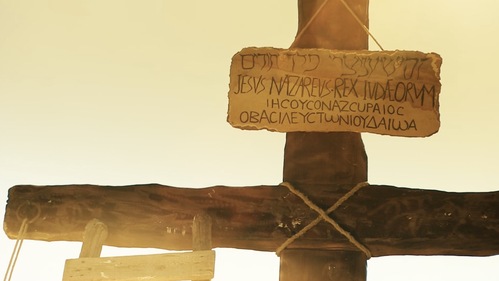
The trajectory of all these promises converged at a place called Golgotha. There, a Roman governor named Pilate—who knew nothing of Hebrew prophecies—made a decision that fulfilled them all. He ordered an inscription placed above the crucified Jesus: "Jesus of Nazareth, King of the Jews."
Remarkably, Pilate insisted this be written in three languages: Hebrew, Latin, and Greek. The Jewish leaders, recognizing the implications, protested. They wanted it changed to say "This man claimed to be King of the Jews." But Pilate refused: "What I have written, I have written."
In three languages—representing the Jewish world, the Roman Empire, and the broader Hellenistic culture—the declaration went forth: Jesus is King. Not just for one nation, but for all nations. The promise to Abraham that through his offspring all nations would be blessed was being proclaimed from the cross itself.
Making Contact With the Promise
Like that batter with 125 milliseconds to decide, we face a choice. The ball has been thrown. The promise has been fulfilled. Jesus, the King whose kingdom lasts forever, has come.
Will we recognize Him?
In order to to do so we must study the Scriptures, tracing the trajectory of God's promises with practice, patience, and persistence.
We must humble ourselves to admit that our ways are not better than His. We must change our minds—repent—and align our thinking with His truth.
The Savior we've been searching for is a King. Not a political ruler who will fail like all human rulers eventually do, but an eternal King whose throne is established forever. His kingdom not being one bound by boarders, but by human hearts. Including all those who have made the choice to kneel before King Jesus. The question is not whether He has come, but whether we will recognize Him.
What is written is written. Jesus of Nazareth, King of the Jews—King of all nations—reigns forever.
There's something remarkable about watching a baseball pitcher hurl a 2.9-inch sphere at nearly 100 miles per hour through an imaginary rectangle just 17 inches wide. Even more astounding is the batter who has a mere 125 milliseconds to decide whether to swing—to predict where that ball will be and make contact with its future trajectory.
How do they do it? Practice, patience, and persistence.
This athletic feat mirrors a far more profound reality: the way God revealed His plan of salvation throughout Scripture. From the moment sin entered the world in Genesis 3, something was set in motion—a promise released like a ball from a pitcher's hand. With each passing page of Scripture, with every prophecy and promise, we receive more data about when, where, and how the Savior would arrive. The question is: would people be paying attention enough to recognize Him when He came so that just like the batter, they could make contact with Him when He arrived.
The Promise Begins
The story starts in the aftermath of humanity's greatest failure. After Adam and Eve chose to trust themselves over God, seeking to become like Him rather than submit to Him, God pronounced both judgment and hope. There would be an epic battle between good and evil throughout all human history, but someone was coming who would crush the head of the serpent.
This wasn't just a vague possibility. It was a certainty, a ball already in flight.
Generations later, God made a specific promise to Abraham: through his offspring, all nations would be blessed. The Hebrew text plays with both plural and singular forms—suggesting that through the nation of Israel, the world would be blessed, but also through one specific descendant, the world would receive an eternal blessing.
The apostle Paul, writing to the Galatians some 1,500 years after Abraham, clarified this mystery: "Now the promises were made to Abraham and to his offspring. It does not say 'and to offsprings,' referring to many, but referring to one, 'and to your offspring,' who is Christ" (Galatians 3:16).
The Pattern of Human Leadership
The historical trajectory continued through slavery in Egypt, deliverance through Moses, and the giving of the Law—430 years after God's promise to Abraham. The Law wasn't meant to replace the promise but to reveal humanity's need for the promised Savior.
After settling in the Promised Land, Israel entered the period of Judges—leaders raised up to deliver them from oppression and call them back to God. The judges had four primary roles: to adjudicate disputes, to govern, to deliver from external oppressors, and to turn the people's hearts back to God.
But the people grew dissatisfied. They looked around at neighboring nations and wanted what everyone else had: a king.
Their request revealed a fundamental misunderstanding. They thought a political solution could solve a spiritual problem. They believed that if they could just get the right leader in place, everything would be fine. Sound familiar? Every election cycle, we hear similar promises—that if only the right person gains power, our problems will be solved.
God granted their request, but with a warning. Through the prophet Samuel, He explained what kingship would mean: they were rejecting God as their king and choosing to be ruled by flawed humans instead. In chess, every piece exists to serve and protect the king. That's what they were asking for—to become servants to a human ruler rather than living under God's perfect law.
A Kingdom That Would Last Forever
Their first king, Saul, failed. Their second king, David, also failed—but with one crucial difference: David repented. The word "repentance" literally means to change your mind. It's not primarily about feelings but about thinking differently. When we start thinking rightly, our feelings follow.
To David, God made an extraordinary promise: "When your days are fulfilled and you lie down with your fathers, I will raise up your offspring after you, who shall come from your body, and I will establish his kingdom. He shall build a house for my name, and I will establish the throne of his kingdom forever" (2 Samuel 7:12-13).
This promise had an immediate fulfillment in Solomon, who built the temple. But the word "forever" pointed beyond any mortal king. God was promising that from David's lineage would come a king whose throne would be established for all generations.
Psalm 89 reflects on this promise with wonder: "I have made a covenant with my chosen one; I have sworn to David my servant: 'I will establish your offspring forever and build your throne for all generations.'"
The Stump and the Branch
The prophets foretold that before this eternal kingdom came, Israel would face devastation. The kingdom David established would be reduced to ruins. Isaiah used the image of a mighty oak tree cut down to a stump—but promised that from that stump, a holy seedling would emerge.
"There shall come forth a shoot from the stump of Jesse, and a branch from his roots shall bear fruit" (Isaiah 11:1).
Jeremiah echoed this promise: "Behold, the days are coming, declares the Lord, when I will raise up for David a righteous branch, and he shall reign as king and deal wisely, and shall execute justice and righteousness in the land" (Jeremiah 23:5).
The Inscription Above the Cross
The trajectory of all these promises converged at a place called Golgotha. There, a Roman governor named Pilate—who knew nothing of Hebrew prophecies—made a decision that fulfilled them all. He ordered an inscription placed above the crucified Jesus: "Jesus of Nazareth, King of the Jews."
Remarkably, Pilate insisted this be written in three languages: Hebrew, Latin, and Greek. The Jewish leaders, recognizing the implications, protested. They wanted it changed to say "This man claimed to be King of the Jews." But Pilate refused: "What I have written, I have written."
In three languages—representing the Jewish world, the Roman Empire, and the broader Hellenistic culture—the declaration went forth: Jesus is King. Not just for one nation, but for all nations. The promise to Abraham that through his offspring all nations would be blessed was being proclaimed from the cross itself.
Making Contact With the Promise
Like that batter with 125 milliseconds to decide, we face a choice. The ball has been thrown. The promise has been fulfilled. Jesus, the King whose kingdom lasts forever, has come.
Will we recognize Him?
In order to to do so we must study the Scriptures, tracing the trajectory of God's promises with practice, patience, and persistence.
We must humble ourselves to admit that our ways are not better than His. We must change our minds—repent—and align our thinking with His truth.
The Savior we've been searching for is a King. Not a political ruler who will fail like all human rulers eventually do, but an eternal King whose throne is established forever. His kingdom not being one bound by boarders, but by human hearts. Including all those who have made the choice to kneel before King Jesus. The question is not whether He has come, but whether we will recognize Him.
What is written is written. Jesus of Nazareth, King of the Jews—King of all nations—reigns forever.
No Comments